

The Inner Negotiator
What do you do when a gun is in your face?


I thought I learned about negotiation at Tufts University’s Fletcher School and Harvard’s Program on Negotiation, but the important stuff really came to me decades earlier on the NYC subway during the 1970s and 80s when urban crime was at an all time high. Criminals, mentally ill people, gangs and hostile humans were easy to encounter and hard to elude. Once it came down to a gun in my face, while other times it was about being surrounded by toughs intent on an easy mugging. Sometimes you just needed to engage—without education or training.
I had to talk my way out of street encounters a lot. Sometimes, talk worked to convert my foe into a friend. Other times, it was more psychological warfare; get in the head of the bigger, louder adversary, and play around in there until I got my way. There were lessons in bluffing and bluster, in creating fear, and activating the irrational parts of my counterpart’s brain. Yes, there are ways to deal with the person who wants to hurt you. This was live training on how to get out of hostile situations, influence other people and do so without preparation. With self-command and tactical improvisation, you can successfully resolve all kinds of negotiations. These were essential lessons long before my formal training.

The luminaries at Harvard’s Program on Negotiation when I was a doctoral fellow there 1999-2000 worshiped at the altar of the Getting to Yes approach. Its foundational authors, Roger Fisher and William Ury, offered an accessible, popular version of ideas pioneered by Robert Axelrod in his work The Evolution of Cooperation. Axelrod taught us that to escape from the Prisoners’ Dilemma of negotiations we have to create or see the ‘Shadow of the Future’: cooperation today generates reciprocity tomorrow, and vice versa. There was also the game theory school of thought—led by Howard Raiffa—with its emphasis on the quantitative aspects of especially transactional negotiations. You might have heard of ZoPA, or the “Zone of Possible Agreement”. In the rearguard was a more obscure social-psychological school of thought to which my Fletcher mentor, Jeffrey Rubin had contributed. But the psychological schools used experimental research with undergrads as subjects—and they didn’t match the realities that interested me: negotiations in which stakes were life and death: war and peace, trade and climate negotiations, complex business transactions, and even mediation within organizations.
The win-win school of negotiation offered a tremendous shift in the way we look at conflict but had scant advice on tactics. The major difficulties I saw with it included avoidance of the effect of massive power asymmetry; reluctance to go deep into the cultural nuance of communication; and ignorance of the sheer irrationality of how people really decide to say yes or no in risky circumstances. On the plus side, their teaching method relied on practical exercises, and more rarely, observation and coaching. But there was something quasi-cultish about the approach that got under my skin. I knew that some people will just exploit you and hurt you if you can’t persuade them otherwise. Some of them even speak the win-win language.

I made my own methods as I developed a career training people in negotiation. I even applied these methods on missions to get ceasefires going or to get peace negotiations on track. But I was always looking for a better way. To do so, I had to get back to the street lessons of NYC. It took decades of experimentation. (I’m a little slow, but I get there, and the journey matters.)
In 2022, I developed the Tactics Lab, an approach that produces immediate and observable influence on counterparts. It is analogous to a gun range or a driving school. I instruct briefly about a tactic, demonstrate it, then get my executive or advisor or soldier to practice it while I coach them in real time. I interrupt, cajole, berate a bit, suggest phrases, and make them do it again until it produces the desired effect. There is sweat. Nerves and laughter. And then a powerful moment… the learner sees their own success.
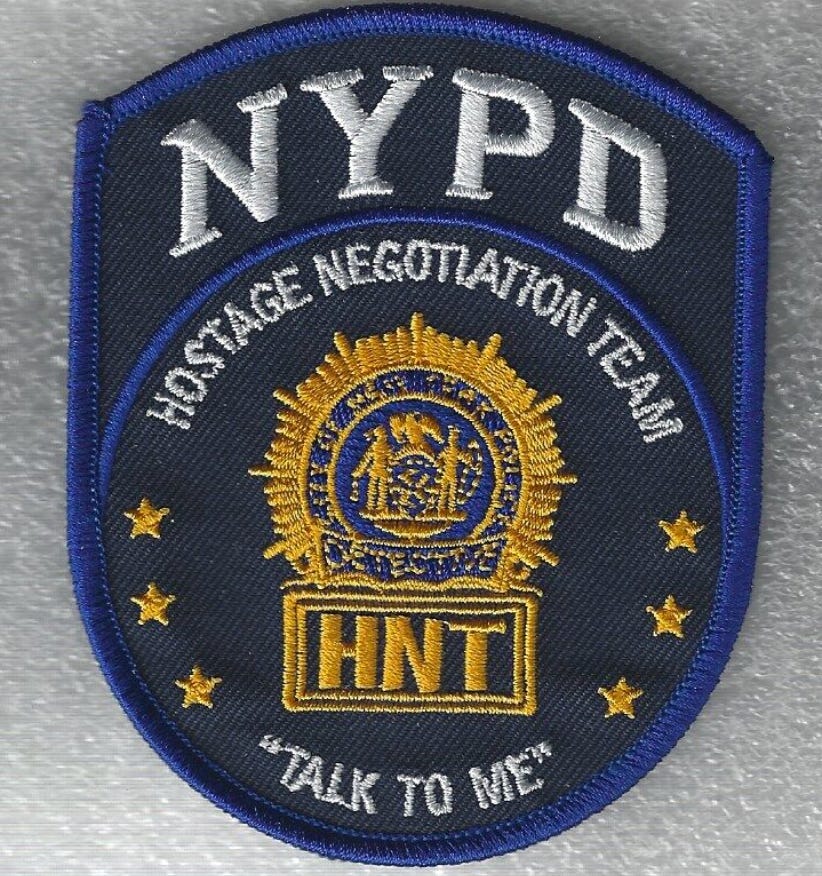
Of the various schools of negotiation thought, it was the psychological that promised the most. But academic treatments of negotiation psychology are usually offered without a shred of acknowledgment that the costs of failure can be as high as your life, or the lives of others. Few people knew that better than what I call the ‘expeditionary negotiators’: Hostage negotiators, civil affairs soldiers and humanitarian relief workers, among others. People on their own at the frontier with only their wits to resolve extremely unstructured encounters. At a conference a few years back, I was fortunate to meet Jack Cambria, the founder of NYPD’s Hostage Negotiation Team. He greeted me like a long lost nephew, with kisses on both cheeks, Mediterranean style. With his Italian immigrant story, and my Middle Eastern one, there was an instant connection. He and a generation of police hostage negotiators figured out that you have to “connect” and “respect,” in order to “protect”. From hot barricade situations to terrorist incidents, they plowed a way forward without relying dogmatically on the Harvard folks. They discarded what didn’t work and refined what did. Chris Voss (also a former FBI hostage negotiator) and his book Never Split the Difference cut right to the heart of how you get others to take the risk of saying yes. Voss can explain the psychology of risky decisions in negotiation like no one else, and prescribes tactics in a way that makes sense. Read his book, watch his videos. It’s a brilliant foundation. He even takes a few humorous shots at the Harvard heavyweights in his book.
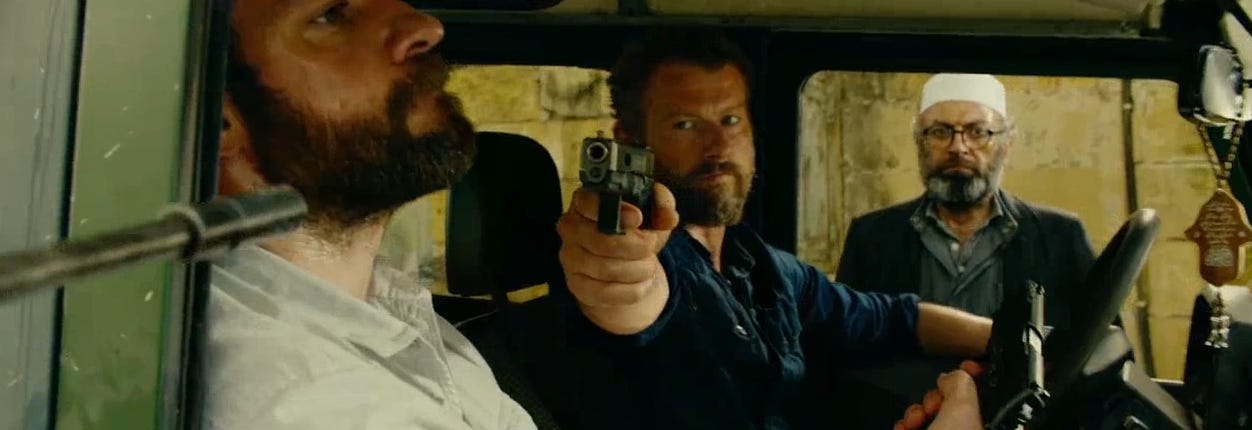
After freeing myself from Fisher and Ury’s BATNA (best alternative to a negotiated agreement) and the game theorists’ ZoPA, I started to focus trainees on tactics that get right into the adversary’s brain chemistry. And I get them to practice their improvisational repertoire. If you’ve ever seen the opening checkpoint scene in the film Thirteen Hours in Benghazi, you know what I mean by tactical improvisation. You cannot pull out a textbook or checklist when the gun is in your face. You must find your inner negotiator and deploy the tactics that suit the moment. You keep trying things until something works. “Nothing works, until it all works,” I tell my trainees.
With my Archeaopteryx colleagues, George Dryden and John Gillette, I was able to turn what used to be a one hour brief on negotiation for defense advisors into a two day deep dive in which a full set of tactical challenges and responses are practiced. We expanded the program to U.S. Army combat advisors, and I have used it with my own graduate students, international business executives and expeditionary negotiators from NGOs, government and military.
Your Inner Negotiator is part of your human potential; a way to influence the decisions of others. Hopefully yours are not in hostile environments. But what I learned from those situations helps us in the everyday push to make the world a little more humane and ethical, a little more optimal and fair. A little more relational and collaborative.
We’d enjoy a little back and forth on your negotiation thoughts.
 | A guest post by
|
 | A guest post by
|